Today is: Sunday March 14, 2010 | Version 2.0 beta

Sort By: Lemke, Brett


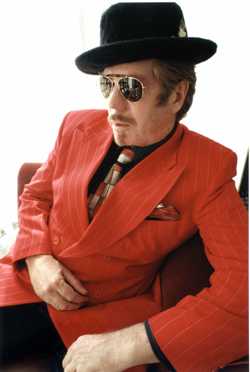
Dan Hicks & the Hot Licks in Maximum Ink in December 2007

Dan Hicks & the Hot Licks

by Brett Lemke
December 2007

Dan Hicks has been performing an eclectic mix of staccato, alt-jazz guitar over the brushed swagger of his swing band The Hot Licks for over 30 years. Based in the San Francisco Bay Area, Hicks has just released “Duets,” a download-only album featuring collaborations with Tom Waits, Bette Midler, Willie Nelson, and Rickie Lee Jones. Hicks spoke with Maximum Ink about the new incarnation of The Hot Licks, his first band The Charlatans, and working with filmmaker Ralph Bakshi.


Read More...


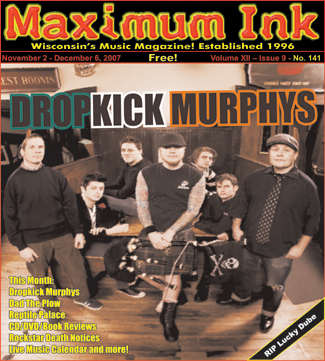
Dropkick Murphys on the cover of Maximum Ink November 2007

The Dropkick Murphys

by Kimberly E. McDaniel
November 2007

An interview with Dropkick Murphys vocalist Al Barr


Read More...


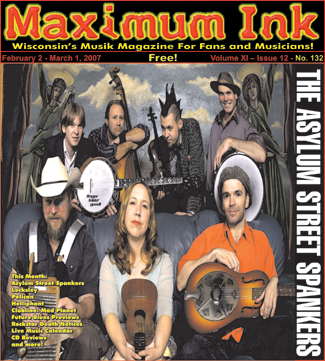
Asylum Street Spankers on the cover of Maximum Ink February 2007

Asylum Street Spankers

by Brett Lemke
February 2007

An interview with Wammo of the Asylum Street Spankers


Read More...


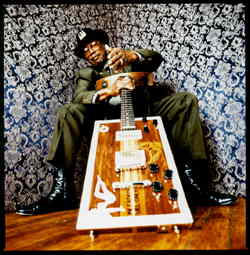
Bo Diddley, the legendary Hall of Famer speaks with Brett Lemke

Bo Diddley

by Brett Lemke
October 2006

Bo Diddley is the originator. Born in 1928, he is widely acknowledged as the father of rock n’ roll, a grandfather to punk, and has been copied more times than any recorded musician this side of Clyde Stubblefield. Like Stubblefield, Diddley has been elected into the Rock and Roll Hall of Fame, and recently received a Lifetime Achievement Award from the Grammies.

His signature rhythm, the “Bo Diddley Beat” has spurred generations of rockers, from Buddy Holly, The Who, Bruce Springsteen, U2, and Guns n’ Roses, to the Rolling Stones, Muddy Waters, Aerosmith, Bob Seger, the Animals and, of course, George Thorogood. In 2003, Diddley was honored by US Representative John Conyers, Jr., who stated that Bo Diddley was “one of the true pioneers of rock and roll who has influenced generations,” and he’s been instrumental in helping to organize benefits for Katrina victims in Mississippi.

Some believe the name Bo Diddley comes from an old, southern black slang phrase meaning “nothing at all,” as in, “he ain’t bo diddley.” Others believe it may have been his nickname as a Golden Gloves boxer. Another story links the name to the “diddley bow,” a one-stringed instrument that consisted of a nail and some bailing wire attached to your front porch; A common start for many players on the old south.

In 1955, Bo Diddley was the first African-American to appear on “The Ed Sullivan Show,” and he was also the first person to be banned: According to the history books, he was asked to play a cover song, “16 Tons,” but instead played his No. 1 R&B hit, “Bo Diddley.” Enraging Sullivan, Diddley was banned from further appearances on the show, 12 years before The Doors were banned for singing “girl we couldn’t get much higher” in 1967. Diddley later recalled that Ed Sullivan commented that he was, “the first colored boys to ever double-cross me.”


Read More...


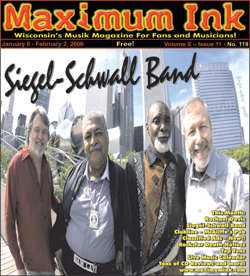
The Siegel-Schwall Band - originally from Madison, WI

The Siegel-Schwall Band

by Brett Lemke
January 2006

The Siegel-Schwall Band first emerged in 1966 on Vanguard Records in the height of the Summer Of Love blues boomlet. Young Corky & Jim were students of the Chicago Blues and could be found cutting their chops in the Windy City’s clubs with legends like Muddy Waters, Willie Dixon and Hubert Sumlin on an average Thursday evening. Siegel-Schwall released nine studio albums and collaborated with conductor Seiji Ozawa and the San Francisco Symphony Orchestra before parting ways in 1974. Their traditional routine of yearly reunion shows since their 1988 Reunion Concert album on Alligator Records has finally been broken, and the group has released Flash Forward, their first studio record in 32 years featuring all originals, and their most polished effort to date. Maximum Ink spoke with Jim Schwall and drummer Sam Lay about what lies ahead for them.

Originally starting out as a duo for small club gigs, Jim would play guitar, Corky would play piano, harp, and percussion, and they both would sing. A rotating rhythm section was added when bookings for larger gigs became standard. When they were signed to Vanguard Records, Siegel-Schwall released four records: The Siegel-Schwall Band, Say Siegel-Schwall, Shake and Siegel-Schwall 70. The group moved to RCA/Wooden Nickel in 1971 and released Sleepy Hollow, 953 West, Last Summer and the aptly titled R.I.P. before breaking up in 1974. Siegel went on to pursue a solo career intertwined with a fusion of classical music and blues and Jim Schwall earned a PhD in Music.


Read More...


Page 1 of 3 pages  1 2 3 >