Today is: Monday May 21, 2012 | Status: Under Re-development | Version 2.177

Latest Articles

Latest first back to the beginning of Time

Sort By: Jeff Muendel


Ronnie James Dio

Ronnie James Dio

Six Decades of Ronnie James Dio
by Jeff Muendel
June 2010

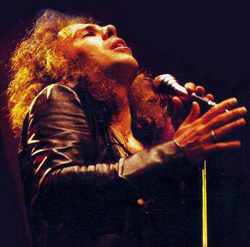
Six decades. That is the span through which Ronnie James Dio (born Ronald James Padavona) was a rock‘n’ roll professional. With his death last month on May 16, an incredible music career ended. Dio was best known for his work in heavy metal, and in fact he became a cultural icon – one often steeped in humor – for the exaggerated posturing and fantastical lyrics that are a rich part of the genre. His introduction of the “metal horns” hand sign cemented it. To be sure, Dio immersed himself in such things, but it’s interesting to note that his musical career actually took him through several rock‘n’roll genres.

In 1958, a band from upstate New York called Ronnie And The Red Caps released their first 7-inch single on a small label called Reb Records. They could be described as a doo-wop group. Ronnie James Dio was the singer of that band, and the vinyl single began his professional recording career. Dio went on to form a group called Elf that also garnered a recording deal. That band, which had their first release in the late sixties, could be best described as boogie rock. But Dio’s strong voice set the group apart from many of the hippie bands of the time, lending a power to the band that was unusual.

Elf got a big break by landing opening slots for Deep Purple


Read More...

     Votes: 0

W.A.S.P.

by Jeff Muendel
February 2010

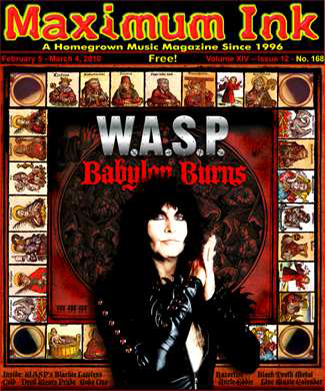
Those who have encountered the band W.A.S.P. are not likely to forget the experience. Like them or hate them, their stage antics tend to be memorable. The group almost literally clawed their way out of the early eighties Los Angeles heavy metal scene the same fertile ground that produced the likes of Mötley Crüe, L.A. Guns, and Ratt. These groups paved the way for many more hair bands to come, but W.A.S.P. was a little bit different. While many of the other groups from that era focused on a cross-dressing, bad-boy image, W.A.S.P. was just plain twisted and scary; the group was more Alice Cooper than Rolling Stones. Band members had circular saws sewn into the crotch of their trousers. Raw meat was cut up and thrown into the audience. Blood was a common stage prop. All of this accompanied aggressively sexual lyrics, buzz saw guitar riffs, and pumping double-bass drums.

At the heart of the group, then and now, was Blackie Lawless. In fact, he is the only remaining original member, and for all intents and purposes, W.A.S.P. is his artistic vehicle. Lawless was born Steven Duren on Staten Island, New York. Famously, or perhaps infamously, he got his first break playing with the legendary New York Dolls. The group was in its final death throes, but it introduced Lawless to New York Doll’s guitarist Arthur Kane. After the New York Dolls finally split, Lawless followed Kane to Los Angeles.


Read More...

     Votes: 0

Don Airey

by Jeff Muendel
December 2008

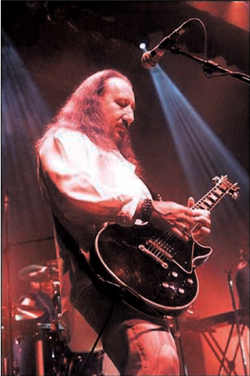
Don Airey isn’t a name that many people know well, but his keyboards have been heard by most anyone listening to American radio in the last twenty-some years. The pipe organ intro to Ozzy Osbourne’s “Mr. Crowley?” That’s him. The slick strings in Whitesnake’s “Still of the Night” or the glassy electric piano on “Here I Go Again?” That’s him, too. How about the freaky synthesizers on Black Sabbaths’ Never Say Die album? Yeah, that’s Don Airey again.

The list if bands that Airey has either recorded with or been a member of is long, but includes (besides those already mentioned) Jethro Tull, Judas Priest, Gary Moore, The Michael Schenker Group, Rainbow, Thin Lizzy, and UFO.  He has come to be the most prolific keyboardist in hard rock. He is also the current organist in Deep Purple, perhaps one of the most keyboard-intensive bands in the history of rock.


Read More...

     Votes: 0

Uriah Heep - Mick Box

by Jeff Muendel
November 2008

Mick Box has been the lead guitarist of Uriah Heep since the band’s founding in 1969. If my math is correct, that’s 39 years ago. The group, rightfully referred to as both classic rock and heavy metal pioneers, was one of the first to use overdriven Hammond organ as part of their big sound. Box’s guitar was the heaviness on the other side of the stage, however, and mixed with singer David Byron’s distinctive lyrics celebrating all things wizards and unicorns, the group attracted a large audience quickly.

Despite Uriah Heep’s progressive rock experiments, the group is perhaps best known today for the song “Easy Livin,” a straight-up hard rock song that became a biker anthem in the United States. The band (whose name, by the way, was taken from a Charles Dickens character in the book David Copperfield) has never ceased being in existence despite the death of David Byron and many lineup changes along the way. Now, almost 40 years later, the group has released its twenty-first studio album entitled Wake The Sleeper. It is true to its musical roots with chunky Hammond organ riffs, loud guitars, and fanciful lyrics. Maximum Ink recently spoke to Mick Box about the album and all things Uriah Heep:


Read More...

OOOOO Votes: 1

Kraftwerk

by Jeff Muendel
April 2008

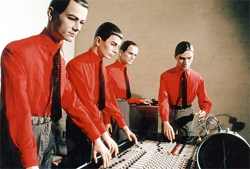
The history of Kraftwerk begins in 1970 when Florian Schneider-Esleben and Ralf Hütter, the founding members of the band, formed a group called Organisation. The Oranisation’s only album, Tone Float, was a mixture of tape loops, electronic feedback, and clanking rhythms. It was decidedly experimental compared to what the rest of the musical world was doing, and while a German record contract was landed, the LP did very little in the way of sales. By the end of that same year, however, the group had morphed into Kraftwerk.


Read More...

     Votes: 0

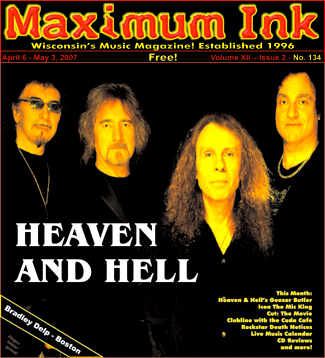
Heaven and Hell - Black Sabbath with Dio on the cover of Maximum Ink April 2007 - photo by Mick Huston

Heaven And Hell

an interview with Geezer Butler
by Jeff Muendel
April 2007

Ah, the sordid and storied life of a rock and roll band; make it a heavy metal group, and the drama is always, for lack of a better term, amplified. Sometimes, it’s hard to even know where to begin. In this case, the beginning is somewhere in the middle…

When Ozzy Osbourne left Black Sabbath in 1979 (or was asked to leave, depending upon who you ask), the group replaced him with veteran vocalist Ronnie James Dio. Having recently parted ways with Rainbow, Dio was not only available, but also a known commodity, and his addition to the Black Sabbath ranks made it a sort of metal supergroup. Dio and original members Tony Iommi, Geezer Butler and Bill Ward went to work writing new material.

The resulting album was “Heaven and Hell,” both an instant classic and a return for Black Sabbath to the core of their musical style, a mode from which they had drifted significantly in their last years with Osbourne. Through heavy touring and the success of the album, Black Sabbath managed to avoid the drop in popularity that almost always follows the departure of a charismatic lead singer. If anything, their popularity grew.

Drummer Bill Ward left the band due to health problems after the “Heaven and Hell” tour, but Black Sabbath soldiered on and produced another amazing album, “Mob Rules.” The group toured again (with Vinny Appice behind the kit) and simultaneously recorded a live album on the tour. During the mixing of that recording, which would eventually be deemed “Live Evil,” problems began to grow amongst the band members. There were accusations between the new guys (Dio and Appice) and the remaining founding members (bassist Geezer Butler and guitarist Tony Iommi). Within months of the live album’s release, both Dio and Appice had left the group.

Ronnie James Dio went on to form his own band called, quite simply, Dio. Simultaneously, Geezer Butler left Black Sabbath to pursue other paths while Tony Iommi kept the Black Sabbath name alive with various and ever-changing lineups of musicians.

In 1992, Iommi moved to reunite the Dio lineup of Black Sabbath; Butler, Appice, and Dio joined the guitarist once again to record a new album called “Dehumanizer.” They hit the road again, finding themselves in front of huge audiences throughout the world, but it wouldn’t last long.

Toward the end of the “Dehumanizer” tour, Ozzy Osbourne – hugely successful as a solo artist –  announced that he was retiring from rock and roll (that didn’t last long, either) and asked Black Sabbath to join the bill for his last two solo concerts in California. Dio refused to participate because he felt Black Sabbath shouldn’t be reduced to an opening act for Ozzy. The others disagreed, however, and appeared without him, recruiting Rob Halford of Judas Priest to sing. Ozzy ended up joining his old Sabbath mates on stage, and the four original Black Sabbath members decided to reunite. Dio , head held high, regrouped his solo band.

So, it is from this rich history that the Dio-era Black Sabbath now returns, some 15 years later, with a new album and a new tour under the band name Heaven and Hell. Maximum Ink recently had the chance to speak to bassist Geezer Butler about this latest incarnation of the band and get his take on all things Black Sabbath:

MAXIMUM INK: Back in 1979, when Black Sabbath first auditioned Ronnie James Dio, is it true that “Children of the Sea” was written in the first rehearsal?
GEEZER BUTLER: I think so, what I can remember of it, at least. Tony Iommi met Dio at a party and they originally talked about doing something together, you know, another project. They might have jammed some, but then Ozzy left the band. So Dio started to jam with us [Black Sabbath], and I think in one of those early jams, perhaps the first one, “Children of the Sea” came together.


Read More...

     Votes: 0

Page 1 of 2 pages  1 2 >